
9 Risks You Face If You Do Not Commission a Structural Survey
Without a geomatic structural survey, projects often rely on assumptions, outdated drawings, or limited visual inspections, which creates uncertainty from the outset and increases the likelihood of issues arising later in the project.
What is a Structural Survey?
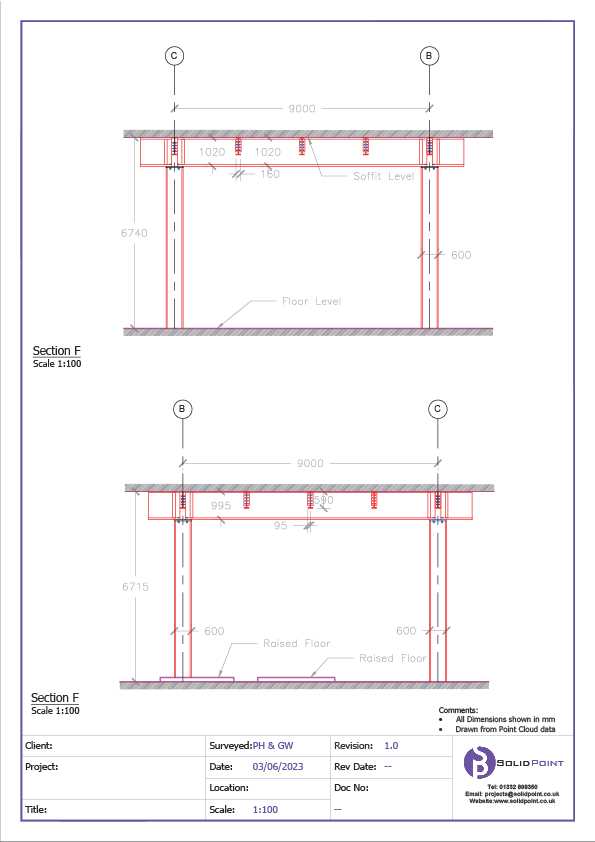
A structural survey is a detailed measurement of the main structure and connections of beams, components of a building and columns to understand its form, dimensions, condition, and any signs of deformation.
The aim is to provide reliable information for design, repair, monitoring, refurbishment, construction, or risk management, helping clients and professionals make informed decisions based on highly precise measured evidence.
So what risks do you face when you don't commission one?
1. Dimensional inaccuracies
Existing drawings do not always reflect the true condition of a building, especially if it has been altered over time. Even small discrepancies in dimensions can lead to misalignment between structural elements, causing clashes on site and requiring last minute adjustments.
2. Missed structural defects
Visual inspections alone are not enough to identify all issues. Subtle problems such as cracking, deflection, or material deterioration can go unnoticed without precise measured data. These defects may only become apparent once work is underway, when they are more costly to address.
3. Unforeseen movement and irregularities
Buildings naturally shift and settle over time. Without accurate survey data, these movements are difficult to detect and quantify. This can result in designs that do not fully account for the existing structure, leading to complications during construction.
4. Inaccurate design information
When architects and engineers are forced to rely on assumptions, design outputs become less reliable. This can lead to elements not fitting or performing as expected once construction begins, requiring redesign and rework.
5. Delays and disruption on site
Unidentified issues often cause delays while teams investigate and resolve problems. This disrupts project timelines and can have a knock on effect across multiple stages of the build.
6. Increased costs and contractor claims
Unexpected changes to the design or scope can lead to additional costs, including redesign fees and contractor claims. Budget overruns are common when accurate information is not available from the start.
7. Health and safety risks
Undetected structural issues can pose safety risks during construction and occupation. Addressing these problems reactively is often more complex and carries greater risk than identifying them early.
8. Greater commercial risk
For developers and building owners, a lack of reliable structural data reduces confidence in planning and decision making. It can also make coordination between project teams more difficult and increase overall project risk.
9. Lack of long term maintenance insight
Without detailed structural data, it is harder to plan effective maintenance. Issues may go unchecked over time, potentially leading to structural failure and significantly higher repair costs in the future.
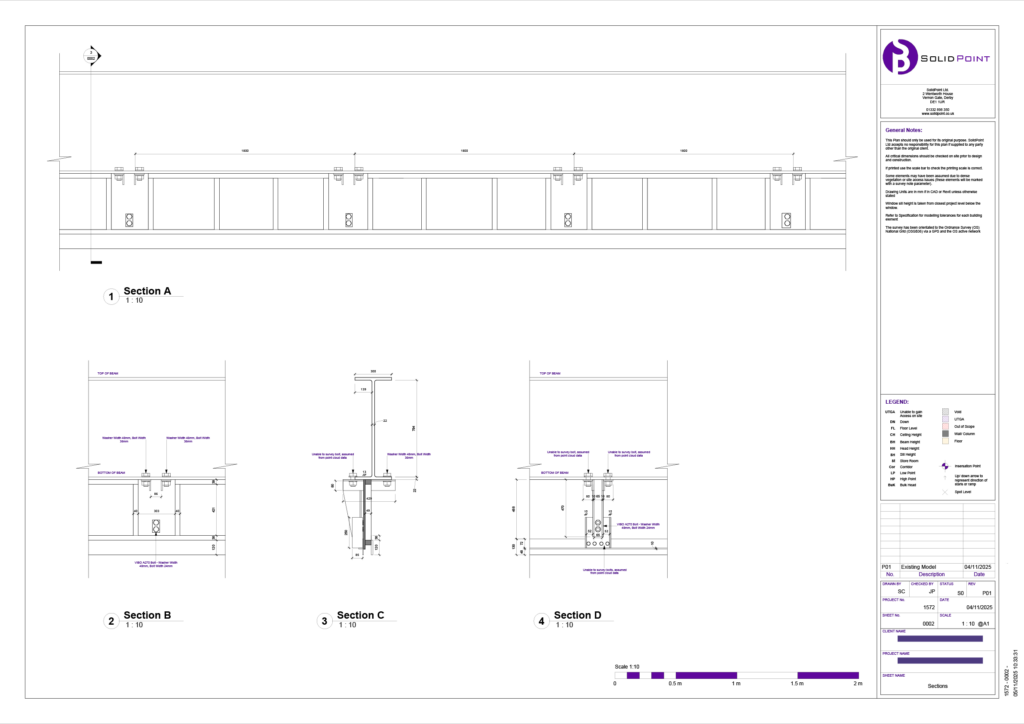
A professional geomatic structural survey provides accurate, dependable information that supports informed decisions at every stage of a project. Without it, the risk of delays, additional costs, and unforeseen issues increases significantly, often outweighing any initial saving.