
Is a 360 Tour Really Useful?
360 virtual tours are an invaluable tool across construction, property, and design projects. They offer far more than just a visual walkthrough - when captured professionally, they create a detailed, interactive record of a space that can be accessed anytime, from anywhere.
Virtual tours are great on their own but are even better when used alongside something else, whether it be survey data or a property listing.
360 tours are often used alongside measured surveys and point cloud data to give clients a complete understanding of a site. Whether you are planning a refurbishment, managing a build, or marketing a property, the flexibility of a virtual tour can support better decisions at every stage.
Benefits of a 360 Tour
1. Building Inspections Without the Need to Attend Site
One of the biggest advantages of a 360 virtual tour is the ability to carry out inspections remotely.
Building inspectors, structural engineers, and architects can log in and review specific elements of a structure such as beams, joints, or connections without needing to travel to site. This is particularly useful for early-stage assessments or when multiple specialists need to provide input quickly.
Because tours can be captured at different stages of construction, they also allow teams to review progress over time. You can revisit a building while it is still being developed and track how it evolves, which is especially valuable for identifying issues before they become costly problems.
Remote access also makes collaboration easier. Entire teams can review the same space online at any time of day, discuss findings, and make decisions together without the delays that come with coordinating site visits.
2. Planning Layouts and Improving Design Decisions
For designers, having a true sense of space is essential. A 360 tour allows interior designers, architects, and planners to virtually walk through a building before making any design decisions.
Instead of relying on drawings alone, you can visualise how rooms connect, how people move through the space, and where improvements could be made. This helps when planning renovations, reconfiguring layouts, or simply improving the overall flow of a building.
Being able to revisit the space as often as needed also reduces the risk of missed details. Designers can check dimensions visually, assess proportions, and ensure that proposed changes will work in reality, not just on paper.
3. Making Spaces Accessible for Education and Training
360 tours open up spaces that might otherwise be difficult to access.
Educational institutions, museums, and heritage sites can offer virtual tours that allow people to explore buildings from anywhere in the world. This makes learning more accessible and inclusive, especially for those who cannot travel.
Tours can also include interactive elements such as pop-up information points, giving users additional context about what they are viewing. This transforms a simple walkthrough into an engaging learning experience.
Branding and visual themes can be customised as well, allowing organisations to align the tour with their identity while maintaining a professional and consistent presentation.
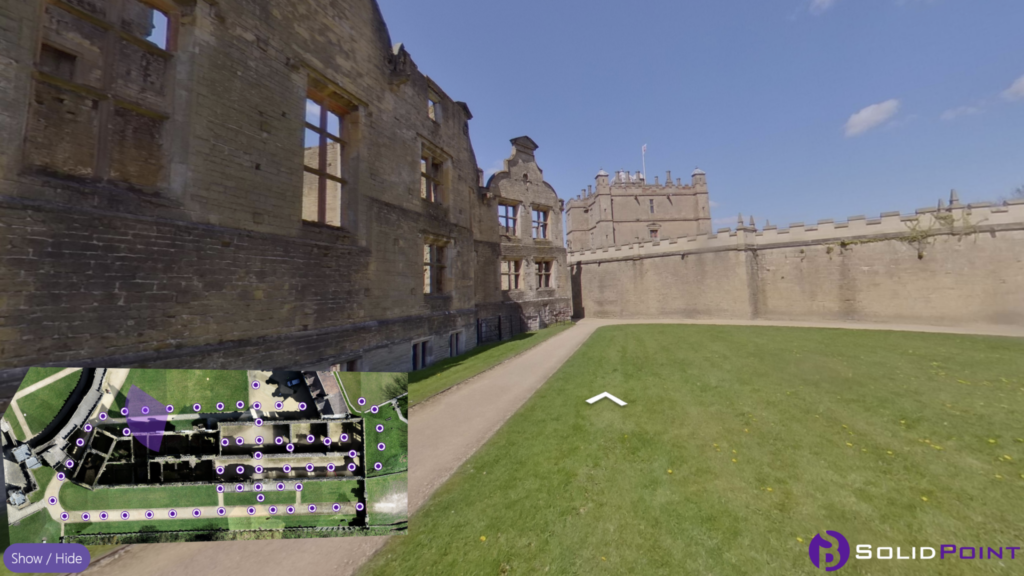
360 Tour to provide an accessible experience at a British Heritage site
4. A Smarter Way to Market and Showcase Properties
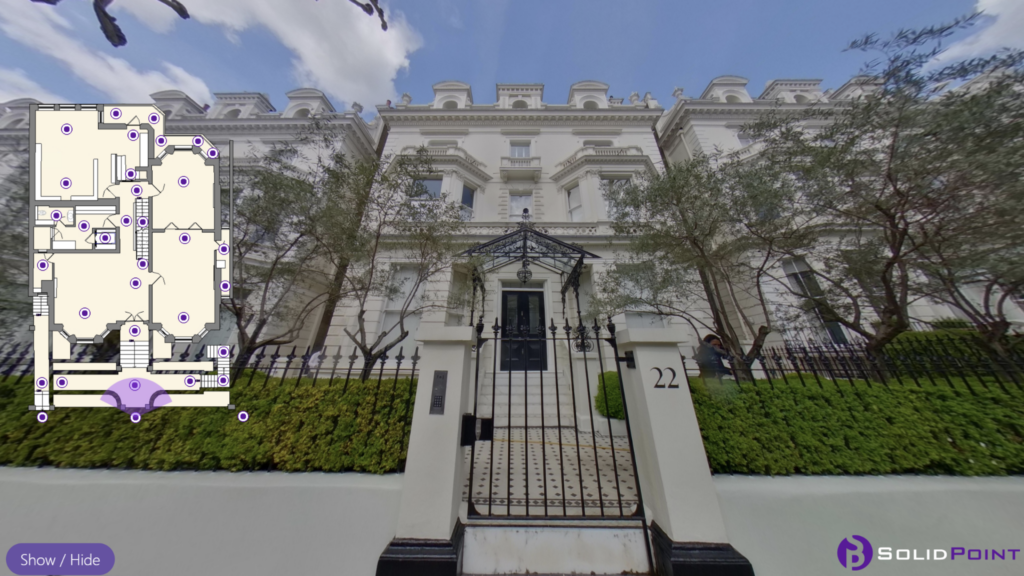
In property marketing, first impressions matter. A 360 virtual tour allows potential buyers or tenants to explore a space in detail without needing to attend in person.
This means properties can be viewed by multiple people at the same time, from anywhere in the world. It also allows prospective clients to revisit the space as often as they like, helping them feel more confident in their decisions.
For agents and developers, this reduces the need for repeated physical viewings and saves time while still providing a high-quality experience. Custom branding options also ensure the tour reflects your business and presents the property in the best possible way.
5. Supporting MEP Design and Coordination
For MEP (mechanical, electrical, and plumbing) design, understanding the existing space is critical.
A 360 tour allows surveyors and engineers to look into ceiling voids and service areas to see exactly where systems run. This can be invaluable when planning upgrades, maintenance, or new installations.
Tours captured before MEP systems are installed can also support early-stage design. Engineers can review the available space and plan routes more effectively, reducing clashes and improving coordination.
During the design process, having constant access to a visual reference of the building helps ensure that plans remain practical and aligned with real-world conditions.
Benefits of a Virtual Tour By Industry
360 tours are useful for a wide range of reasons, across many industries. We've put together a Top 5 list to showcase how:
Construction
When a team is finished on site, they can send the client a link to a digital version of the building, giving them a perfect record of the finished work.
Managers can virtually walk the site from their office, so can spot a safety mess or a bad paint job without wasting fuel and time sitting in traffic to get there.
The virtual tour can be sent to building inspectors or architects so can look around at specific things like beams or joints and give feedback without having to attend site.
MEP Specialists
Surveyors can look at an image in the ceiling so they can see exactly where a specific MEP runs.
A virtual tour allows them to see a construction site before any MEP gets built, which will help them design the space.
While working on designing MEP for a building, they can look at a tour showcasing the space you have, helping you plan where things need to go.
Estate Agents
A 360 tour allows you to view a property online from anywhere, so if you’re advertising a place to rent or sell, you can hold viewings without having to attend the building.
You can sell a house to someone in another country - a potential buyer can check every inch of the space, so they feel safe putting in an offer without flying over.
We offer white label tours upon request to align with your brand guidelines, creating a seamless customer experience.
When a tenant moves out, you have a perfect 360 record of how the place looked - no more arguing over deposits.
Surveyors
A 360 Tour is extremely valuable during data processing and modelling.
Firstly, it provides visual context to the raw data collected on site. The point cloud data collected will provide precise shapes and sizes but can be sometimes difficult to work out surfaces, materials and details with just the data. The 360 tour will allow someone who is modelling to virtually revisit the site and have a 360 image to see the space and help to identify what is unclear from the data, such as bolts and connection details.
When modelling, a 360 tour can be a reference alongside the point cloud data. It gets rid of the need for a repeat visit to site as you will be able to see the site remotely from your computer, saving time and money. Tours can help ensure a high accuracy in the model and improve confidence in the final model by combining the precise point cloud data with a visual representation of the site.
Social Venues
Figure out exactly where crucial elements like a stage or a bar would go without driving to the venue ten times. A virtual tour allows you to make sure everything actually fits.
A virtual tour could make for better advertisement for your venue / space. An interactive feature on your website is better than a few photo albums, making your space stand out more than others.
You can send a tour link to any vendors so they can efficiently plan an event without needing to call you every five minutes asking questions before the big day.
So, Are 360 Tours Really Useful?
360 virtual tours are more than just a visual tool. They are a practical resource that supports better collaboration, clearer communication, and more informed decision-making across a wide range of projects.
From inspections and design to education and marketing, they help teams work smarter by providing instant access to accurate, real-world environments.
When combined with other survey data from SolidPoint, they become an even more powerful asset, giving clients a complete understanding of their buildings and helping to reduce risk at every stage.
Get in touch with us today and upgrade your project!