
Geomatic Structural Surveys
Combine accurate measurement with visual inspection to ensure you have the full structure of your building.
What Is a Structural Survey?
A structural survey is a detailed measurement of the main structure and connections of beams, components of a building and columns to understand its form, dimensions, condition, and any signs of deformation.
It combines accurate measurement with visual inspection to record structural elements such as walls and their makeup such as stud walls, floors and underneath suspended floors, columns, beams and connections, roof structures where accessible, and key defects.
Depending on the project, it may use total stations, laser scanners, distos, calipers, tapes, and other hand tools.
The aim is to provide reliable information for design, repair, monitoring, refurbishment, construction, or risk management, helping clients and professionals make informed decisions based on highly precise measured evidence.

Included In Every Project:
Every structural survey project is tailored to the client’s needs, but typically includes:
- A site review
- Survey control where required
- Accurate measurement of key structural elements, and
- The recording of visible issues such as cracking, deflection, movement, or misalignment.
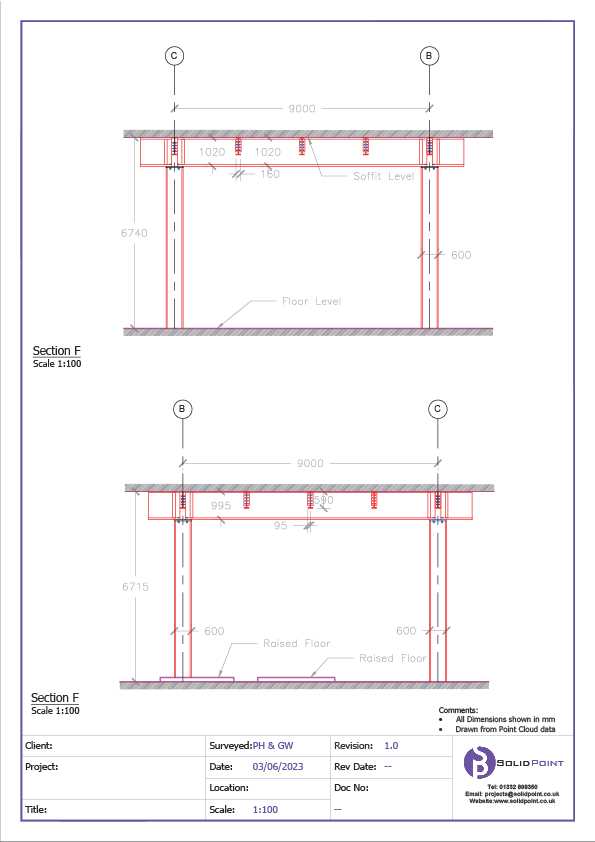
Outputs include 2D CAD drawings or 3D Revit drawings of the:
- Structures
- Elevations
- Sections
- Structural layouts
- Annotated defect mark-ups
- Point cloud data
- Photographs, and
- Can include a survey report upon request.
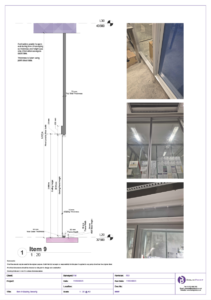
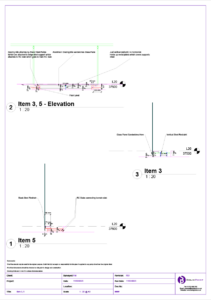
Where needed, close-range measurements are taken using distos, calipers, tapes, and crack gauges to capture details that larger instruments may miss - this gives clients a complete and dependable record of the structure, ready for design teams, engineers, contractors, or asset managers to use. These are converted into drawings:
What Are The Benefits of a Structural Survey?
The main benefit of a geomatic structural survey it gives clients accurate information and insights into the structure before major decisions are made. Reliable measured data:
Reduces risk by finding defects and issues in the structure before it gets to a point of failure and can be repaired
Avoids costly assumptions for refurbishment or extension work. The building contractor will know what they need in order to complete the works. Without a structural survey, the contractor has no way of discovering that the design isn't feasible until they're on site.
Improves confidence across the design as it gives structural engineers and designers peace of mind and helps to create a feasible and efficient design.
These surveys can also create maintenance schedules and identify points of interest and urgency if cracks are revealed or severe deflection.
They support efficient planning by identifying dimensions, structural irregularities, and visible defects early.
For clients, a structural survey creates the difference for:
- Fewer delays
- Fewer variations
- Improved coordination between consultants and contractors, and
- A stronger basis for budgeting and programme planning.
A structural survey also creates valuable project records that can support long-term asset management, compliance, monitoring, and future development works as well as general record keeping.
Do I Face Any Risks If I Don't Get a Structural Survey?
Without a structural survey, projects often rely on assumptions, outdated drawings, or incomplete visual checks. This can result in:
- Dimensional errors,
- Missed defects,
- Unforeseen movement, or
- Inaccurate design information that only becomes apparent once works begin.
The consequences can include delays on site, redesign costs, contractor claims, budget overruns, safety concerns, and avoidable remedial works.
For building owners and developers, failing to obtain reliable measured structural information can also increase commercial risk and reduce confidence in project planning.
A professional structural survey provides dependable outputs that support informed decisions and reduce the chance of costly surprises later. Building owners can also use this for maintenance schedules and to check where areas need to be prioritised as unmaintained and not checked structure can lead to failure and extremely high costs.
Who Are Structural Surveys Useful For?
A structural survey benefits a wide range of professionals and industries, as it provides accurate measured data, clear project outputs, and reliable information for decision-making.
Property Owners & Developers
Property owners and developers benefit by reducing risk, improving budget control, and gaining confidence before refurbishment, redevelopment or acquisition.
Architects & Structural Engineers
Architects and structural engineers use the survey data to support design, analysis, repair strategies, and coordination with existing structures.
Contractors & Project Managers
Contractors and project managers benefit from accurate dimensions and defect records that help avoid delays, variations, and unexpected site issues.
Other Industries Who Benefit Include:
Housing associations, insurers, local authorities, heritage consultants, and infrastructure operators also benefit because structural survey outputs support maintenance planning, condition assessment, compliance, monitoring, and long-term asset management.
FAQs on Geomatic Structural Surveys:
What equipment is used?
Structural surveys can involve laser scanners, total stations, distos, calipers, tapes, and other hand measurement tools depending on the level of detail required.
Can a structural survey be used for refurbishment or design work?
Yes - the outputs are often used by architects, engineers, and contractors to support refurbishment, extension, repair, and redevelopment projects.
How long does a structural survey take?
Timescales depend on the size, complexity, access conditions, and required outputs, but the scope can be tailored to meet project deadlines.
Can the survey be carried out in occupied buildings or live sites?
In many cases, yes. Surveys can often be planned around operational requirements, access restrictions, and health and safety procedures.
How accurate is a structural survey?
Accuracy depends on the survey method, specification, and project requirements, but professional structural surveys are carried out to agreed tolerances and quality standards. Most surveys are done to 1mm ± to 3mm ± accuracy when done with a caliper and disto.
