
The Value of Laser Scanning - Why Accurate Site Data Matters More Than Ever
In a world driven by data, the precision and comprehensiveness of that data become paramount.
Written by: J.Jackson | Published: 8th July 2026
Table of Contents
When people hear the term "laser scanning", they often think of advanced technology, complex software, and millions of data points being captured in a matter of minutes.
While all of that is true, the real value of laser scanning is not the equipment itself.
The true value lies in the quality of information it provides and the confidence it gives everyone involved in a project.
After more than 20 years working within the surveying industry, one thing has remained consistent. The success of any project depends on the quality of the information used to make decisions. Whether you are extending a home, refurbishing a commercial building, redeveloping a site, or preserving a historic structure, accurate data is the foundation of good planning.
Laser scanning has transformed how that information is captured.
What Is Laser Scanning?
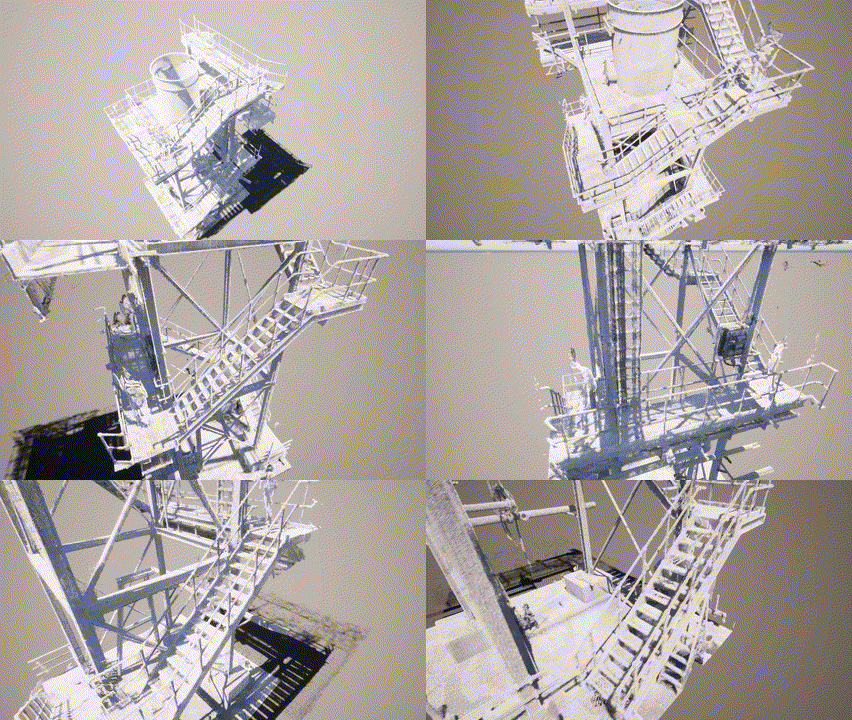
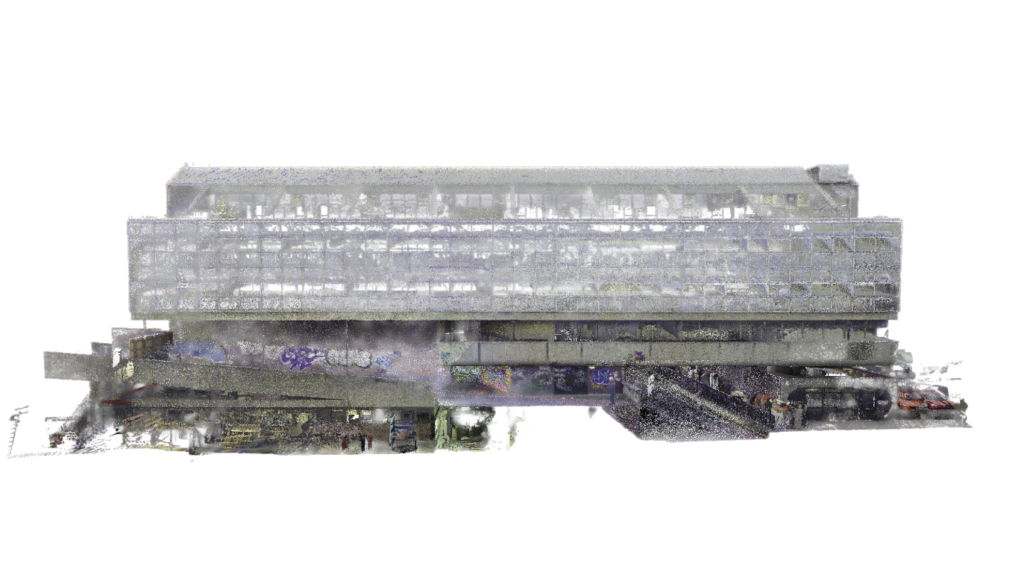
Laser scanning, often referred to as a point cloud survey, uses specialist equipment to capture millions of measurements across a site, building, or structure.
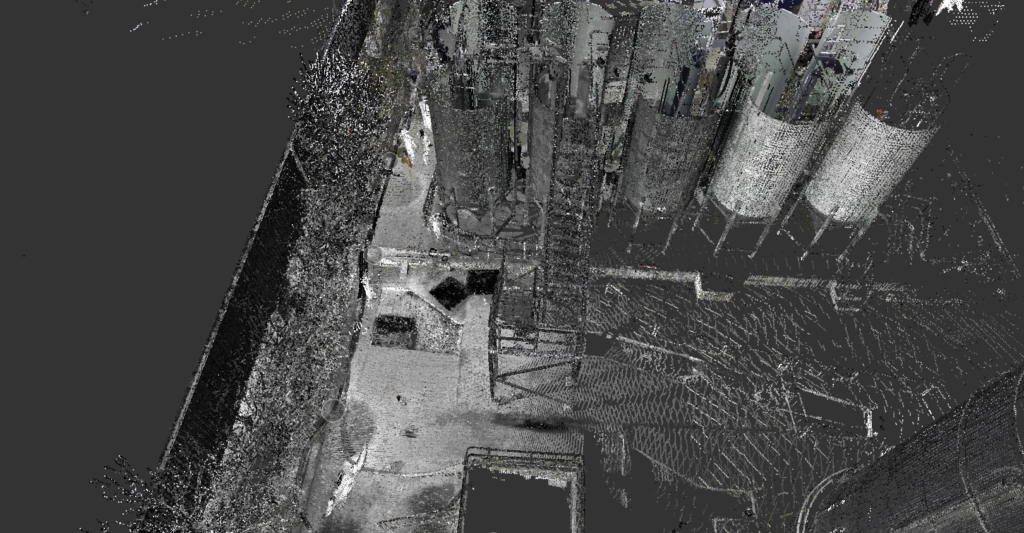
The scanner records precise locations in three-dimensional space, creating what is known as a point cloud. When viewed on screen, these points form an incredibly detailed digital representation of the real-world environment.
Think of it as creating a highly accurate digital twin of a building or site.
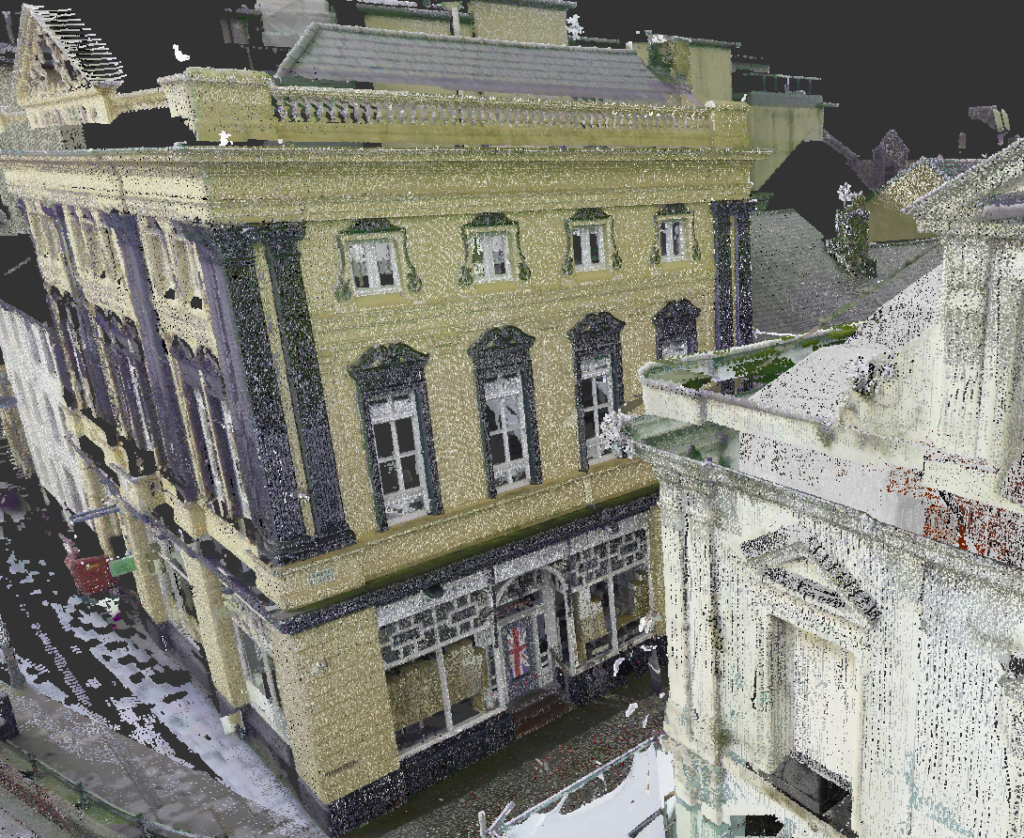
Every wall, floor, beam, window, roofline, and structural feature can be recorded with exceptional accuracy, allowing designers, architects, engineers, and property owners to work from reliable information rather than assumptions.
Why Accuracy Matters
Many of the problems encountered during construction and renovation projects can be traced back to one issue - inaccurate or incomplete information.
Traditional measurement methods can be effective, but they often rely on selective measurements being taken on site, meaning there is always a possibility that something important has been missed.
Laser scanning significantly reduces this risk.
Because millions of measurements are collected during the survey, the resulting dataset provides a far more comprehensive record of the site. Features that may not appear important during the initial survey can still be referenced later because the information has already been captured.
This can be particularly valuable when project requirements change or additional details are needed months after the survey has been completed.
Reducing Costly Errors and Rework
One of the biggest benefits of laser scanning is its ability to reduce mistakes.
Inaccurate dimensions can lead to design clashes, manufacturing errors, construction delays, and expensive rework. These issues often cost significantly more to resolve than the cost of obtaining accurate survey information in the first place.
By providing precise measurements from the outset, laser scanning allows project teams to identify potential issues before work begins.
Architects can design with confidence.
Engineers can verify critical dimensions.
Contractors can better understand existing conditions before arriving on site.
The result is a smoother project with fewer surprises.
Saving Time Throughout a Project
Time is often just as important as cost.
Laser scanning enables large amounts of information to be captured quickly and efficiently. What may have previously required multiple site visits can often be completed in a single survey.
Once the data has been collected, teams can revisit the digital environment as many times as required without returning to site.
- Need an additional measurement?
- Need to verify a ceiling height?
- Need to check the position of a structural beam?
In many cases, the information is already available within the point cloud.
This ability to work remotely from accurate survey data can save considerable time throughout the lifecycle of a project.
Creating Better Designs
Good design starts with understanding what already exists.
Whether designing a home extension, planning a commercial refurbishment, or developing a BIM model, designers need confidence that their drawings accurately reflect reality.
Laser scanning provides that confidence.
The detailed point cloud data can be used to produce accurate floor plans, elevations, sections, topographical information, and Revit models. This allows project teams to make informed decisions and develop designs based on real-world conditions.
The more accurate the starting information, the more accurate the final design is likely to be.
Improving Safety
Not every area is easy or safe to access.
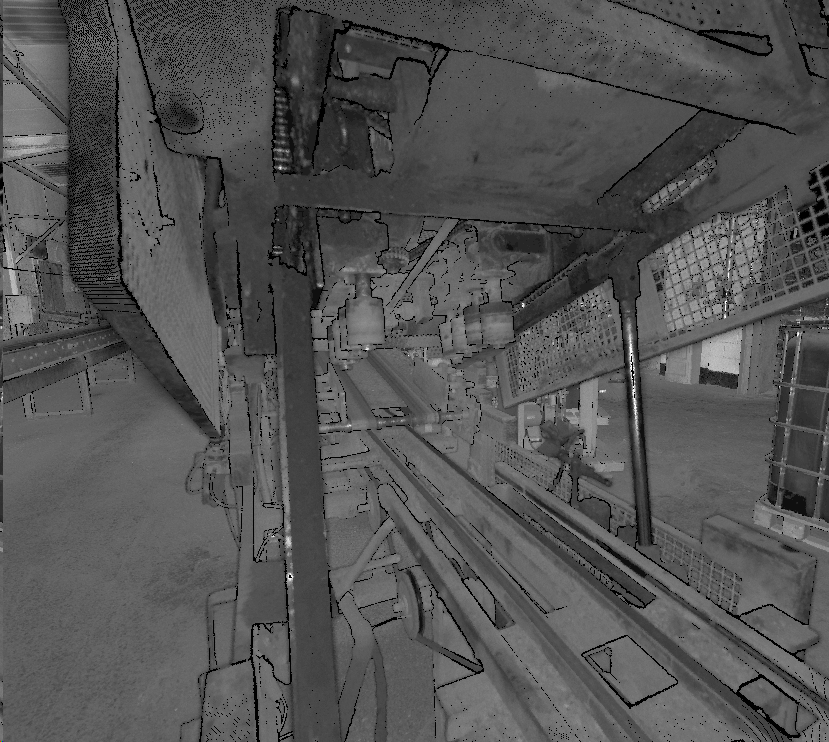
Industrial facilities, roofs, plant rooms, infrastructure assets, and historic buildings can all present challenges when traditional surveying methods are used.
Laser scanning helps minimise these risks by allowing large amounts of information to be collected from safe locations.
Surveyors can often capture hazardous, inaccessible, or difficult-to-reach areas without placing personnel in unnecessary danger, which improves both efficiency and site safety.
A Permanent Digital Record
One of the most overlooked benefits of laser scanning is the long-term value of the data.
Once a building or site has been scanned, the point cloud acts as a permanent digital archive.
This can be invaluable for:
- Future refurbishments
- Building maintenance
- Heritage conservation
- Asset management
- Change monitoring
- Legal documentation
Years after the original survey, the point cloud can still provide a reliable record of the site's condition at that specific moment in time.
For many organisations, this digital record becomes an asset in its own right.
Supporting Modern Construction and BIM Workflows
As the construction industry becomes increasingly digital, accurate survey data has become more important than ever.
Point cloud data integrates seamlessly with modern CAD and BIM workflows, allowing architects, engineers, and consultants to collaborate using a common source of information.
This improves coordination, reduces duplication of effort, and helps ensure that everyone involved in a project is working from the same dataset.
The result is greater efficiency and better decision-making throughout the project lifecycle.
Who Benefits from Laser Scanning?
Laser scanning is valuable across a wide range of sectors and project types.
Some of the professionals who regularly benefit from point cloud surveys include:
-
- Architects
- Structural engineers
- Building surveyors
- BIM specialists
- Heritage consultants
- Property developers
- Contractors
- Facilities managers
However, the benefits are not limited to industry professionals.
Property owners, homeowners, local authorities, and estate managers can all benefit from having access to accurate and reliable survey information before making important decisions.
The Real Value of Laser Scanning
The value of laser scanning is not found in the scanner itself.
It is found in the confidence that comes from having accurate information.
It is found in reduced risk, fewer mistakes, faster decision-making, better designs, safer working practices, and more successful projects.
At a time when construction costs, project complexity, and client expectations continue to increase, reliable data has never been more important.
Laser scanning provides that reliability.
And when decisions are being made that could impact budgets, programmes, and project outcomes, accurate information is one of the most valuable assets you can have.
So, Where Is The Value in Laser Scanning?
Laser scanning has changed the way survey data is captured, but its true value extends far beyond the technology itself. By creating an accurate digital representation of a site or building, it gives project teams the confidence to make informed decisions, reduce risk, and work more efficiently.
Whether you're planning a home extension, managing a refurbishment, developing a new site, or preserving a historic building, accurate information is the foundation of a successful project. Investing in a laser scan at the outset can help prevent costly mistakes, minimise delays, and ensure everyone is working from the same reliable source of truth.
In short, laser scanning is not simply about capturing data. It is about providing clarity, confidence, and certainty throughout every stage of a project.