Everything You Need to Know About CCTV Surveys
Find everything you need to know about CCTV surveys, condensed into one short page
Written by: J.Jackson | Published:
Drainage systems are usually hidden beneath the ground, making it difficult to understand their condition from the surface alone. A drain may appear to be working normally while still containing cracks, displaced joints, root ingress, partial blockages or other defects that could cause problems later.
This guide covers what CCTV surveys are, when they are needed, their main benefits, what they can reveal and the common mistakes to avoid when commissioning one.
In This Page
Download this page as a pdf
What Is a CCTV Survey?

CCTV Surveys
This method of surveying underground drains and pipelines helps identify blockages, damage, and structural issues, ensuring efficient maintenance and preventing costly repairs.
A CCTV survey is an internal inspection of a drainage system using specialist camera equipment.
The camera is guided through foul drains, surface water drains or combined sewer systems, producing recorded footage of the inside of the pipework. This allows the surveyor to identify defects that would otherwise remain hidden below ground, including:
- Blockages
- Cracks and fractures
- Collapsed or deformed pipes
- Displaced joints
- Root or vegetation ingress
- Deposits and obstructions
- Signs of poor maintenance
- Unrecorded connections
- Changes in pipe size or material
The footage can also help establish which drainage runs connect, whether pipes may be suitable for reuse and where repairs or further investigation may be required.
Why CCTV Surveys Matter
Drainage problems are difficult to assess from ground level because the majority of the system is hidden. Surface signs such as slow drainage, unpleasant smells, standing water or repeated blockages may indicate a problem, but they rarely show its exact cause or location.
Without an internal inspection, decisions may be based on guesswork. This can lead to unnecessary excavation, repairs being completed in the wrong place or an underlying problem being left unresolved.
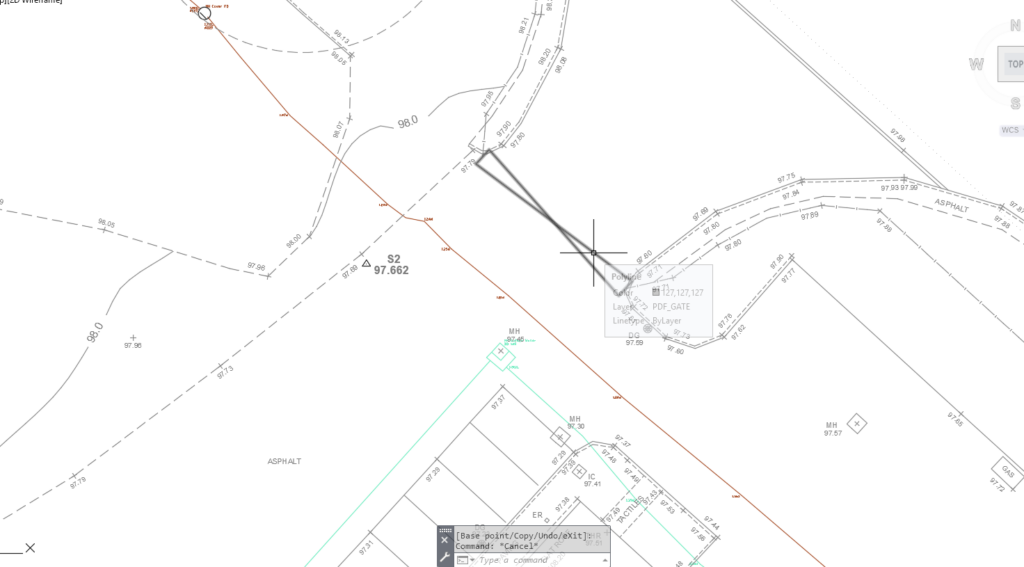
A CCTV survey replaces much of this uncertainty with recorded evidence. It helps the project team understand:
- What condition the drainage system is in
- Where defects are located
- How serious those defects appear to be
- Which pipes connect to one another
- Whether maintenance or repair work may be required
- Whether the existing drainage could affect planned construction
- Where further investigation may be necessary
When Do You Need a CCTV Survey?
A CCTV drainage survey may be needed whenever the location, condition or performance of an existing drainage system could affect a property or project.
Common situations include:
-
- Before purchasing a property
- Before an extension or redevelopment
- When drainage problems keep returning
- Before connecting into an existing drain
- Before repair or maintenance work
- As part of an insurance claim
- During planned maintenance
Key Benefits
Insurance and Compliance
Many insurance companies require evidence of drainage issues before approving claims, and a CCTV survey provides recorded proof.
It also helps meet health and safety or environmental regulations, furthermore, utility companies will ask for CCTV Surveys beforehand if any routing is done into their services.
Recorded evidence
The camera footage creates a visual record of the drainage system at the time of the survey. A supporting report can identify observations, defects and relevant pipe information.
This evidence can be shared with designers, engineers, drainage contractors, insurers, utility providers and other members of the project team.
Better construction planning
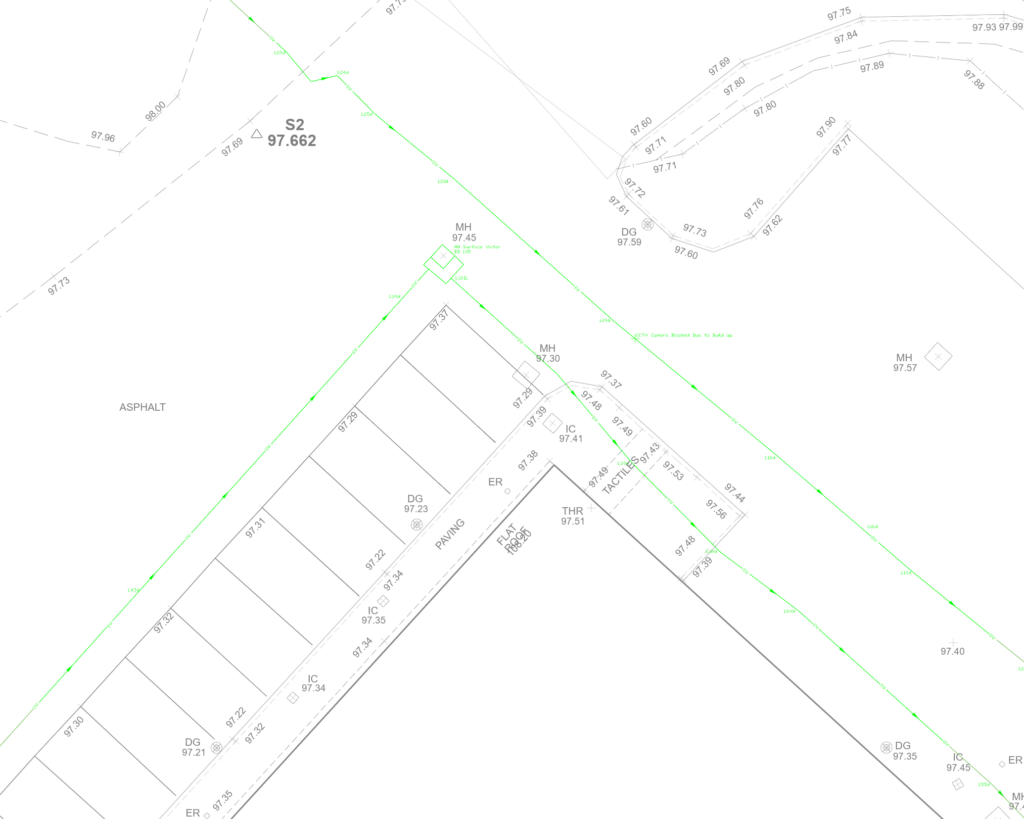
A CCTV survey can help establish which drains connect, the direction of flow and the condition of the existing network. When combined with accurate survey positioning, this information can be added to CAD drawings and assessed alongside proposed works.
A more complete drainage record
Where survey positioning and CAD drawings are included, the final information can provide both the internal condition of the drains and their wider site context. SolidPoint deliverables include video footage, a defect report and CAD drawings showing the surveyed drainage network.
CAD drawings are not a standard deliverable for CCTV surveys - this is something that SolidPoint provides to ensure a seamless record.
How Much Does a CCTV Survey Cost?
Typically the cost can be as low as £695 + VAT for a small sized plot. This price will of course increase dependant on distance and size.
However, we offer a bundle discount if you request a CCTV Survey alongside a Utility Survey, lowering the starting price to £495 + VAT.
How They Can Reduce Costs
CCTV surveys can also identify relatively minor defects before they develop into more serious failures. Early maintenance may be considerably less disruptive than responding to a collapsed pipe, flooding incident or major blockage later.
On construction projects, accurate drainage information can help prevent proposed foundations, landscaping, roads or services from conflicting with existing pipework. Resolving these issues during design is generally easier than redesigning or diverting drainage after work has started.
Potential savings can come from:
-
- Reducing unnecessary excavation
- Targeting repairs more accurately
- Avoiding repeated unsuccessful maintenance visits
- Finding defects before they worsen
-
- Reducing the risk of drainage-related design changes
- Avoiding accidental damage during construction
- Supporting better repair and maintenance planning
- Providing evidence for insurance or asset-owner discussions
A CCTV survey therefore does more than identify damage. It provides information that can help teams make better decisions about where money and resources should be spent.
What Will You Receive?
Every project is different, so deliverables vary. Below, you can find what’s included as a standard in every SolidPoint CCTV survey.
No two scopes are the same, so neither are our processes – discuss your project’s needs with our surveyors, who will put together a package that works best for you.
You will receive:
Survey Drawings -
- DWG File with 2D Drawing with Depths and runs drawn and mapped
- PDF Sheets.
Survey Report -
- A comprehensive PDF document summarising the survey findings, highlighting any issues the surveyor has identified.
Photographic and Video Records -
- Images taken during the survey to provide visual evidence of utility locations and conditions of site, as well as the recording of the CCTV drain.
- Delivered to you in JPEG, PNG and MP4 Files
Manhole Cards -
- Shows details of all the Manholes and Inspection chambers that have been investigated.
- Delivered as a PDF
*If you require a file format that isn't listed as our standard, please reach out to the team who will make reasonable adjustments to fit your scope.
Which professionals may find each deliverable useful:
Drainage Mapping Drawings:
- Used by designers or utility owners to confirm which manhole is connected to which.
- More for indication purposes as well as for possible rerouting or joining up to.
Survey Report:
- Shared with project managers, clients, and regulatory bodies or service providers for compliance and review.
- This is to get an overview of the site so that it can be used for planning or addressing urgent matters, and having a highlight of any issues that are present in the drainage systems.
Photographic and Video Records:
- Referenced by designers, clients and utility owners to have a look over the system themselves.
- Also used by designers and maintenance to determine the health and usability of drain/cover
PDF (Portable Document Format)
Standard for sharing reports and drawings - viewable on any device.
DWG (AutoCAD Drawing File)
Editable drawing files used for technical plans and mapping.
DXF (Drawing Exchange Format)
Compatible with various CAD programmes for design integration.
JPEG / PNG (Image Files)
Used for photographic documentation of site surveys and evidence.
MP4
Standard Video File
Common Mistakes When Commissioning a CCTV Survey & How to Avoid Them
1. Not defining the survey area clearly
Simply requesting a “drain survey” may leave uncertainty about which chambers, pipe runs or parts of the site need to be inspected. Important sections of the network could be omitted if the scope is unclear.
How to avoid this:
Provide a site plan showing the required survey boundary, known manholes and any areas of particular concern. Explain whether the survey is intended to investigate a specific issue or provide a wider record of the site.
2. Commissioning footage without accurate positioning
Video footage may show that a defect exists, but it can be difficult to act on if nobody knows exactly where the pipe or defect sits within the site.
This becomes particularly important when drainage passes beneath proposed buildings, roads, slabs or service routes.
How to avoid this:
Ask whether the drainage runs will be accurately positioned and shown on a CAD drawing - combining footage with mapped drainage information gives the findings much greater context.
Most surveying companies do not offer this, however SolidPoint does. Learn more about deliverables here
3. Treating CCTV findings as a substitute for all underground surveys
A camera survey provides useful information about drains, but it will not locate every other buried service within the site.
How to avoid this:
Where excavation, piling, foundations or construction work is planned, consider commissioning a utility survey alongside the CCTV survey. The CCTV survey assesses the drains internally, while the utility survey helps locate the wider underground service network.
Take a look at more common mistakes made, and other useful tips:
A CCTV drainage survey gives property owners and project teams a much clearer understanding of what is happening beneath the ground.
Rather than relying on assumptions, surface symptoms or incomplete drainage records, the survey provides visual evidence of the condition and connectivity of accessible pipework. This can help identify defects, target repairs, support design decisions and reduce the risk of unexpected drainage problems later.
Stay updated with us:
How Can SolidPoint Help Your Project?
At SolidPoint, we are passionate about providing accurate and efficiently collected data for our clients and have worked on numerous projects across the UK. If you are looking to commission a survey in your next project, please don’t hesitate to Get in touch with a member of our friendly team to discuss your requirements and get a free quote.
Alternatively, you can call us on 01332 898350 or email us at projects@solidpoint.co.uk for more information on our services. We look forward to hearing from you!
Give us a call on
Request a Free Quote






Trusted Suppliers for: